Regenerative Family Farms: Restoring Creation and Food Security
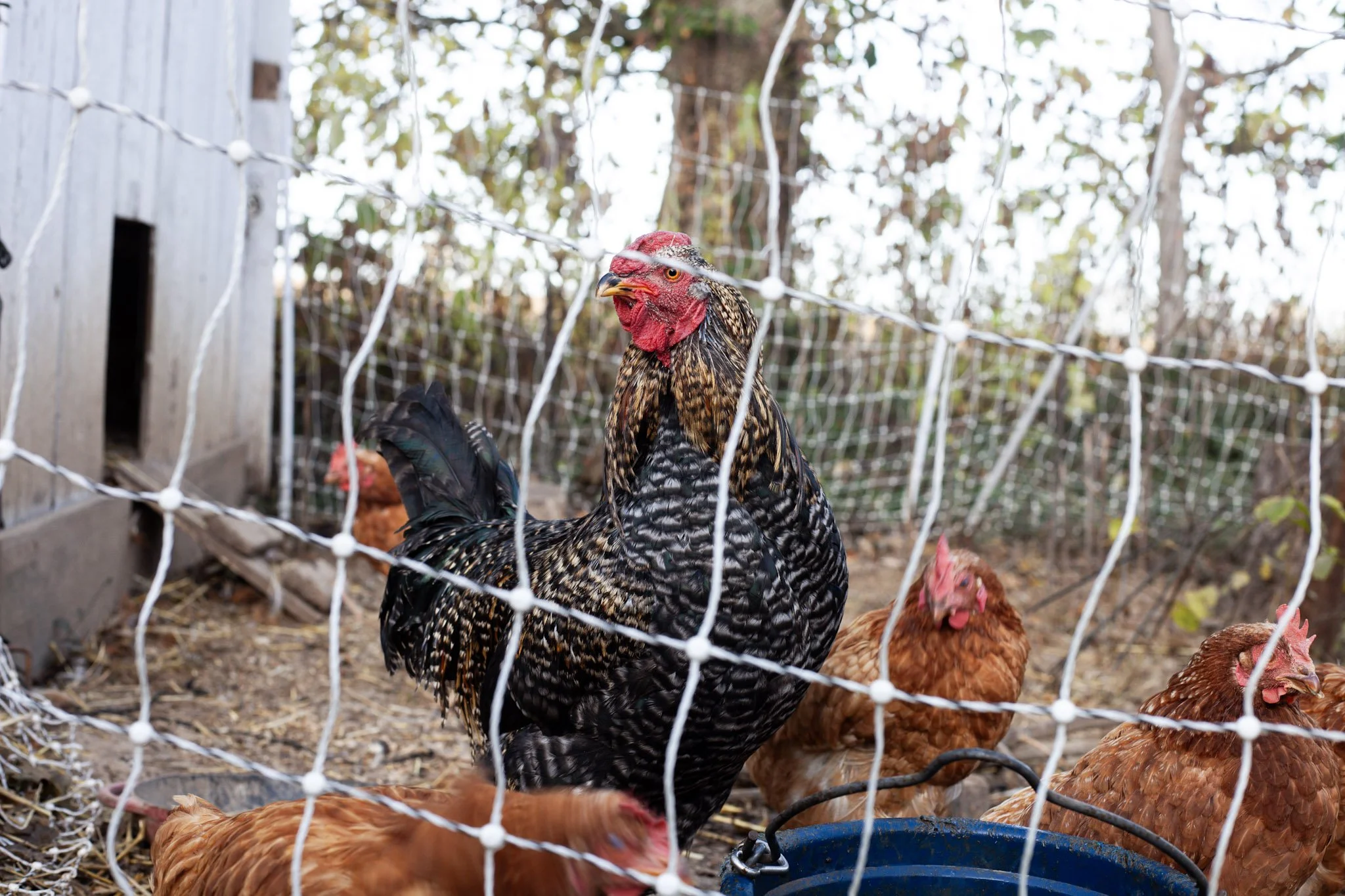
On our little patch of land, mornings are rarely quiet. The rooster crows before the sun crests the horizon, our Jersey cow lowes from the pasture, and three little pairs of feet tumble out of the farmhouse to help collect eggs. My son Hudson usually carries the basket proudly, while my girls Lottie and Birdie toddle alongside, scooping up feathers and chatting to the chickens as though they were old friends. The rhythm of farm life is far from glamorous, but it is deeply good. In those moments I am reminded: this is what God intended when He gave us the gift of creation — families working together, stewarding the land, and eating from the abundance of His provision.
Sadly, this picture stands in sharp contrast to how most of our food is produced today. The reality of industrial farming is sterile, centralized, and fragile. Animals live in confinement, soil is stripped of life, and families have become disconnected from their food. At Rose n’ Thistle Farm, we believe there’s a better way — one rooted in biblical stewardship, regenerative practices, and local resilience.
The Problem with Industrial Farming
For decades, industrial agriculture has promised efficiency and abundance. But what it has delivered is cheap, calorie-dense, nutrient-poor food and a system that is alarmingly fragile. Instead of lush pastures and thriving ecosystems, we see vast monocultures sprayed with chemicals. Animals — creatures that God designed to roam and forage — are locked in confinement, treated as mere units of production.
This system doesn’t honor creation. Instead, it exploits it.
Joel Salatin, one of the leading voices in regenerative farming, often says that industrial agriculture tries to outsmart God’s design. Chickens were never meant to live in windowless houses, cows were never meant to eat grain, and pigs were never meant to be crammed on concrete. When we ignore creation’s rhythms, we end up with sick soil, sick animals, and ultimately, sick people.
Why the System is Fragile
Beyond the ethical and nutritional concerns, industrial farming is simply unstable. We’ve all seen the empty shelves at the grocery store when supply chains falter. Food today is shipped thousands of miles, dependent on fossil fuels, chemical fertilizers, and global networks. Large-scale farms are often propped up by government subsidies, and their practices strip the land instead of restoring it.
This isn’t resilience — it’s dependence. It only takes one disruption to reveal how fragile the system really is.
Contrast that with the design God wove into creation: animals fertilizing the soil as they graze, microbes building life beneath the surface, and families tending the land generation after generation. God’s way is sustainable because it is rooted in truth and order. Industrial farming, built on shortcuts and greed, can never be.
Dominion and Stewardship: A Biblical Mandate
As Christ-followers, we don’t see farming as just producing food — it’s about obedience. In Genesis 1:28, God commands His people to “be fruitful and multiply, fill the earth and subdue it; have dominion…” This verse has often been misinterpreted as a license to exploit. But dominion in God’s economy is stewardship, not abuse. We are called to cultivate, to guard, and to steward creation in a way that glorifies Him.
Psalm 24:1 reminds us, “The earth is the Lord’s, and all its fullness, the world and those who dwell therein.” The soil under our feet, the animals in our pastures, the very air we breathe — it all belongs to Him. What we do with it is an act of worship. Farming in a way that restores rather than destroys is part of our calling as believers.
When we rotationally graze our cows or let our chickens scratch in the pasture, we’re not just mimicking a clever farming model. We are participating in the choreography of creation, aligning our practices with the order God established from the beginning.
The Hope of Regenerative Family Farms
Here’s the good news: there is a better way, and it’s happening on small family farms across the country. Regenerative family farms are not driven by industrial quotas but by the health of the land and the families they feed. Instead of depleting soil, regenerative farms build it. Instead of treating animals like machines, we treat them as creatures with God-given instincts.
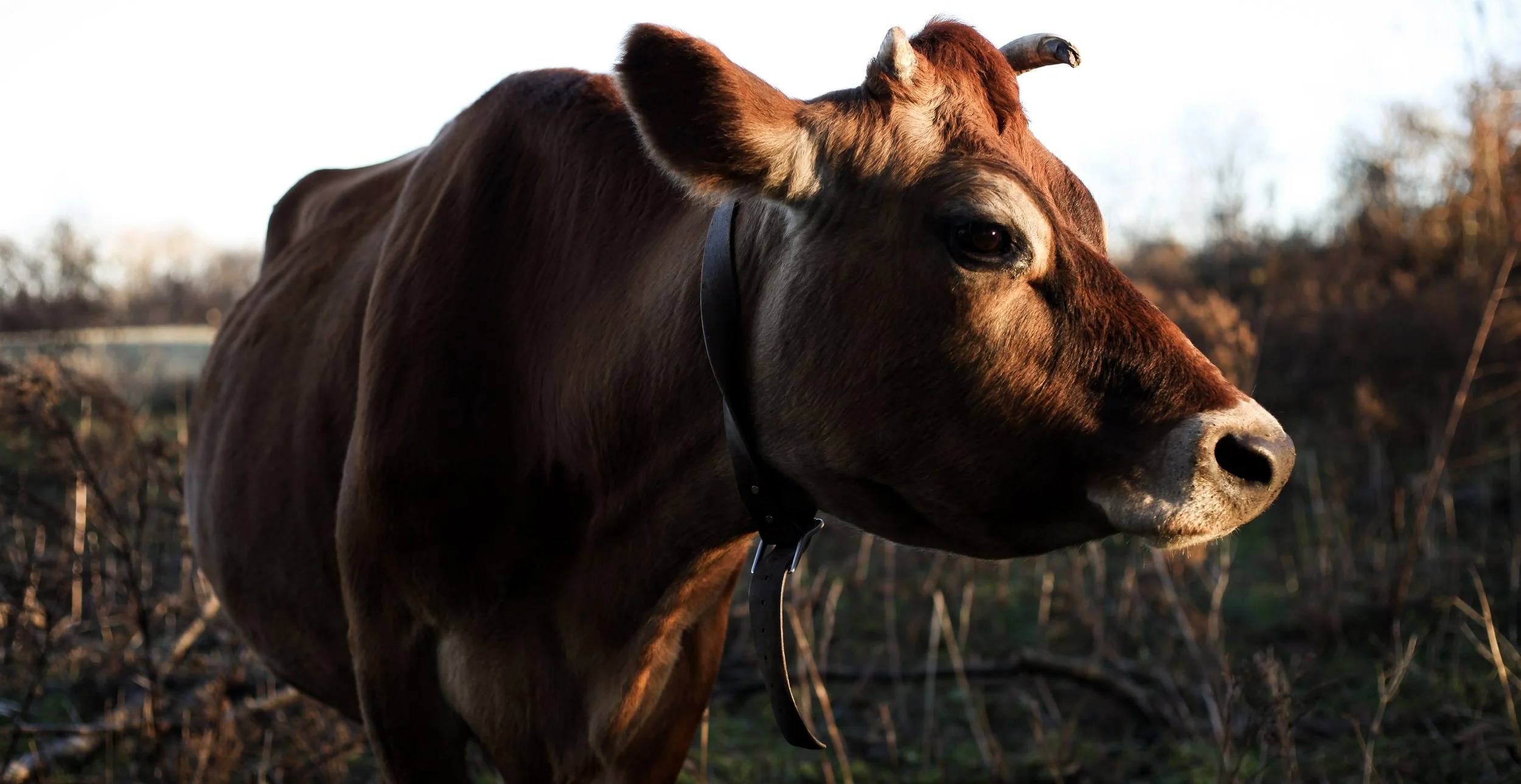
On our farm, our Jersey cow grazes once-a-day in a rotation that leaves the grass stronger behind her. Our chickens follow the cows, scratching through the pasture, spreading fertility, and keeping pests down. The result? Richer soil, healthier animals, and nutrient-dense food for families like yours.
This is the beauty of God’s design: when we work with it instead of against it, creation flourishes.
And it’s not just about ecology — it’s about community. When families buy directly from a farm like ours, they know their farmer, they know their food, and they know the values behind it. In uncertain times, local food isn’t a luxury. It’s security.
Your Role in Stewardship
Supporting regenerative family farms isn’t only about personal health — it’s about faithfulness. Every dollar we spend is a vote for the kind of world we want to build. When we support industrial systems, we participate in their exploitation. When we support local regenerative farms, we participate in restoration.
As Christians, this isn’t optional. It’s part of our witness. Choosing food raised with integrity is one way we take dominion and care for God’s creation. It’s how we say with our lives that we trust God’s design over man’s shortcuts.
At Rose n’ Thistle Farm, we see our work not just as raising chickens, pork, or dairy. We see it as raising a testimony — that God’s way is good, and when we align ourselves with His creation, both land and people are blessed.

Join the Movement
The industrial system is crumbling under its own weight, but hope is rising in small pockets of land like ours. Families all over the country are choosing to eat differently, live differently, and support differently. They are finding health, resilience, and joy in food that is local, seasonal, and raised with care.
We invite you to join us. Come visit our farm store, pick up fresh eggs, sip raw milk, or bring home a bouquet of flowers grown in the same soil where our children play. Every purchase is more than a transaction — it’s an investment in your family’s health, your community’s resilience, and the restoration of God’s creation.
The earth is the Lord’s. Let’s tend it well together.