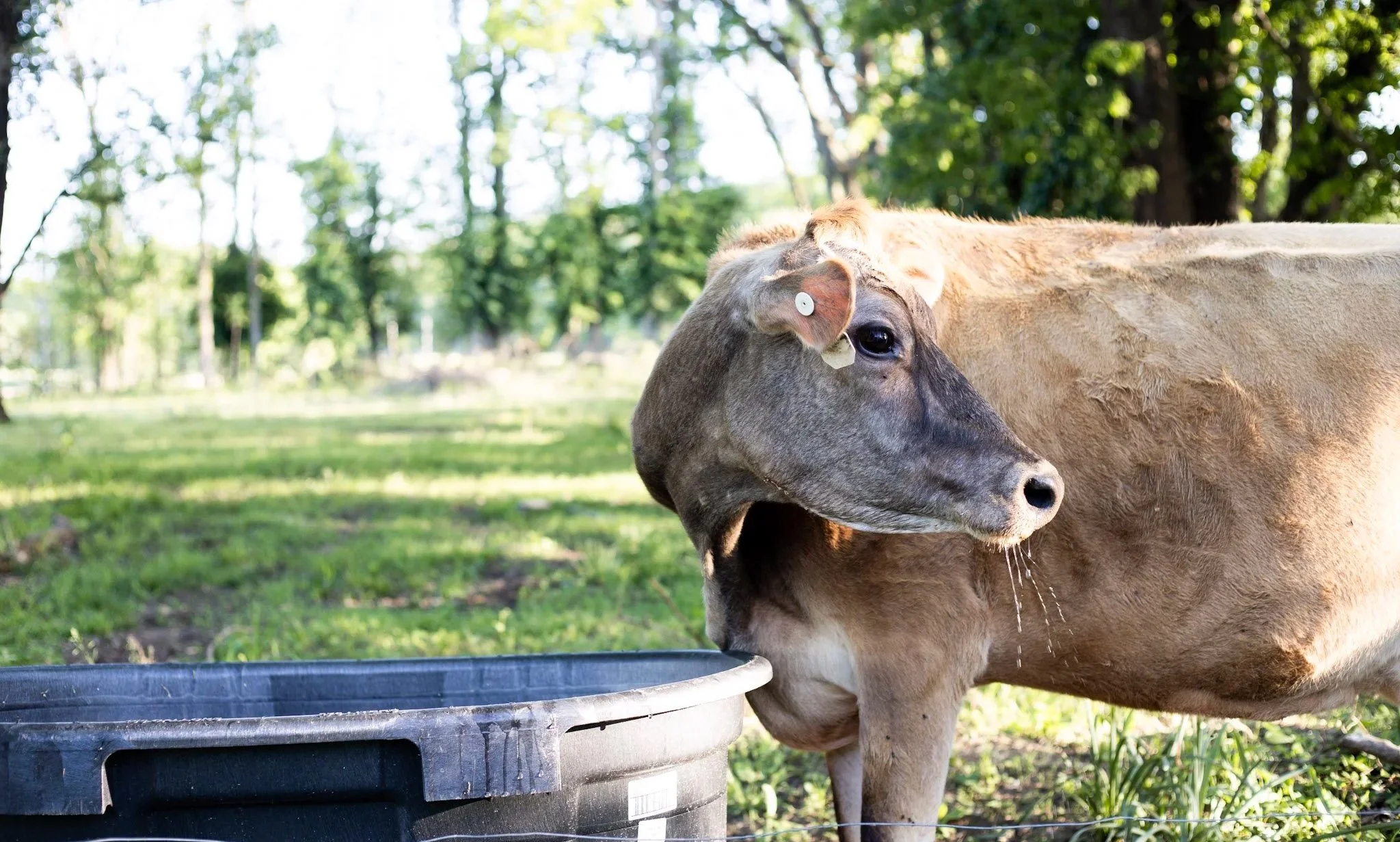
It's one of the questions we get asked most often:
"Are your cows 100% grass-fed?"
The short answer is no—and that's a very intentional decision.
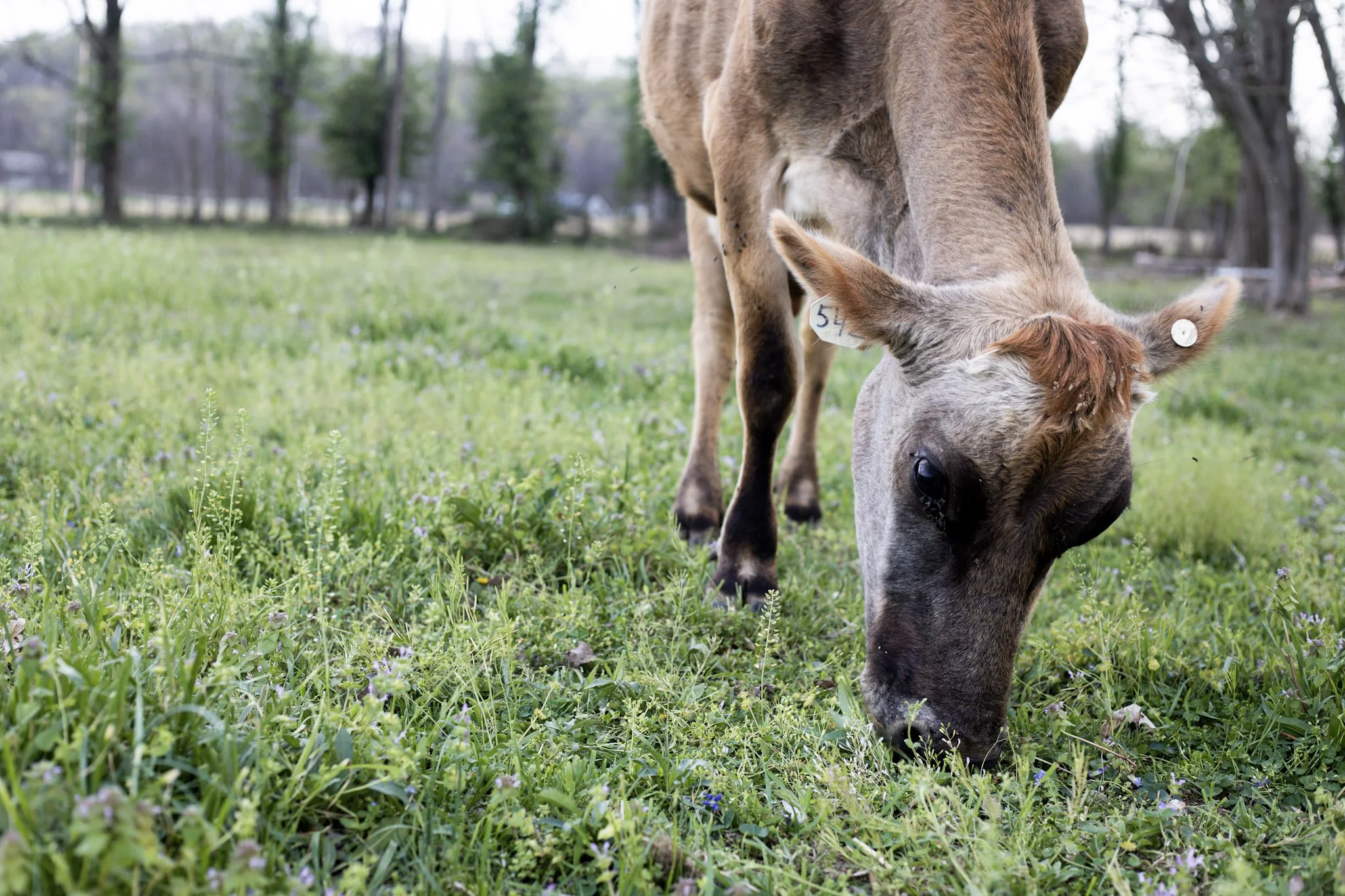
Our Jersey girls spend their days grazing lush pasture, enjoying fresh air and sunshine just as cows were designed to do. Grass is the foundation of their diet, and when pasture isn't available, they receive high-quality hay. In addition, they are supplemented with a 19% non-GMO dairy ration once a day during milking, fortified with Redmond® minerals to help meet the incredible nutritional demands of producing milk.
Could we feed only grass?
Yes.
But after years of learning, seeking advice from experienced dairymen, and caring for our own cows, we don't believe that would be the healthiest choice for the type of dairy cows we have.
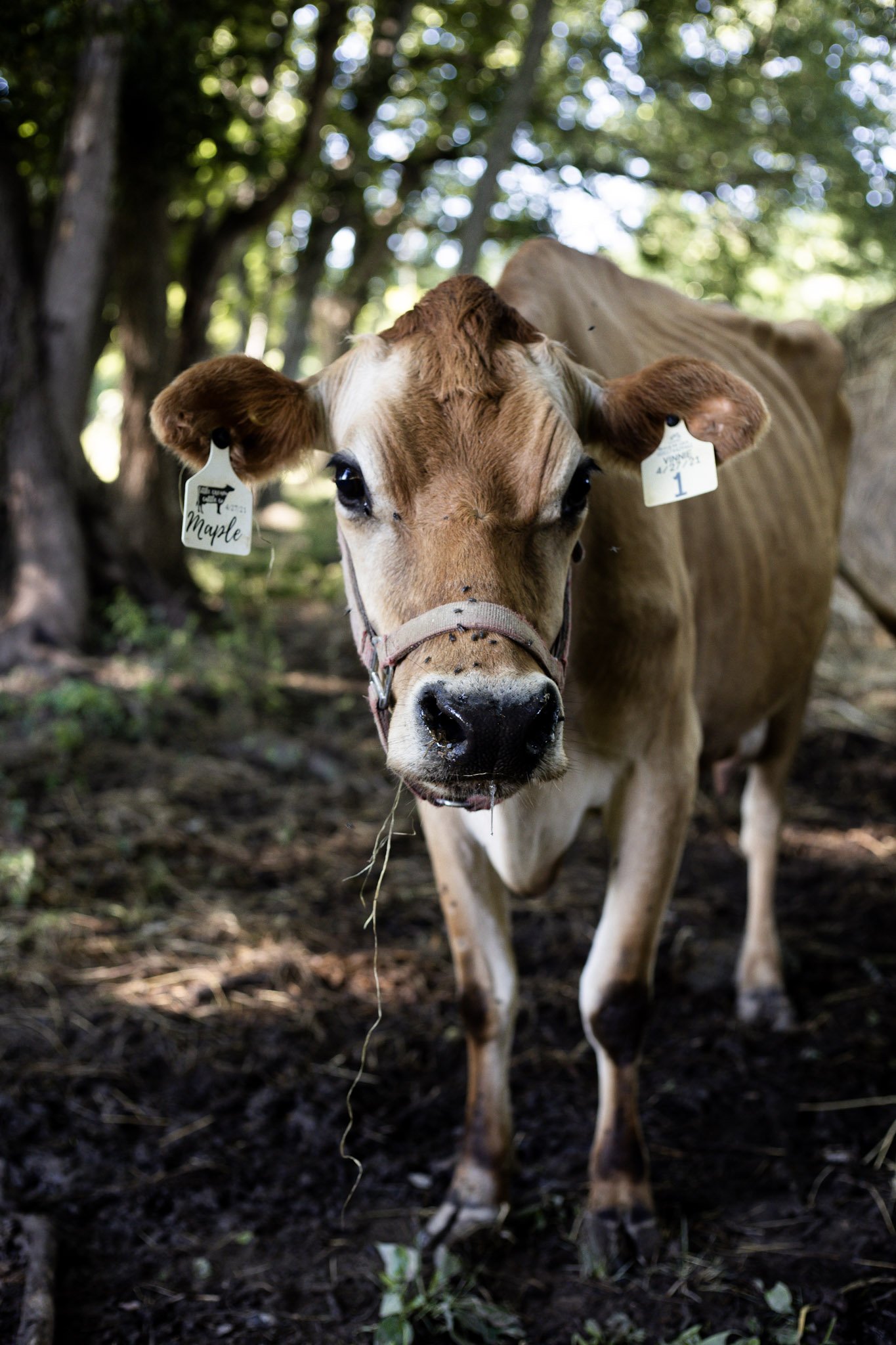
Every Dairy Cow Has an Energy Budget
Think of a dairy cow like an elite endurance athlete.
A marathon runner can't thrive on salad alone, no matter how nutritious that salad is. They need enough calories, protein, vitamins, and minerals to fuel the incredible amount of work their body is doing.
A high-producing dairy cow is no different.
When a Jersey is producing seven or more gallons of rich milk every day, her body is expending an enormous amount of energy. Especially after calving, dairy cows commonly experience what's called negative energy balance—a period when they're burning more energy producing milk than they can consume from forage alone. Research has shown that this energy deficit is one of the primary risk factors for metabolic diseases such as ketosis. Supplying additional energy and protein through a balanced ration helps support healthier body condition, better metabolic health, and continued milk production.
We believe our cows deserve more than simply getting by—they deserve to thrive.
Our Own Experience
This isn't just something we've read in books.
We've personally cared for cows that struggled with ketosis after calving because they simply couldn't consume enough calories from pasture and hay to support the amount of milk they were producing.
Watching a cow battle a metabolic disorder is heartbreaking, and it's not something we ever want to repeat.
That experience shaped the way we think about feeding our herd.
Today, our priority isn't chasing a marketing label. It's making sure our cows have everything they need to stay healthy, maintain body condition, and enjoy long, productive lives.
Learning from Those Who Have Gone Before Us
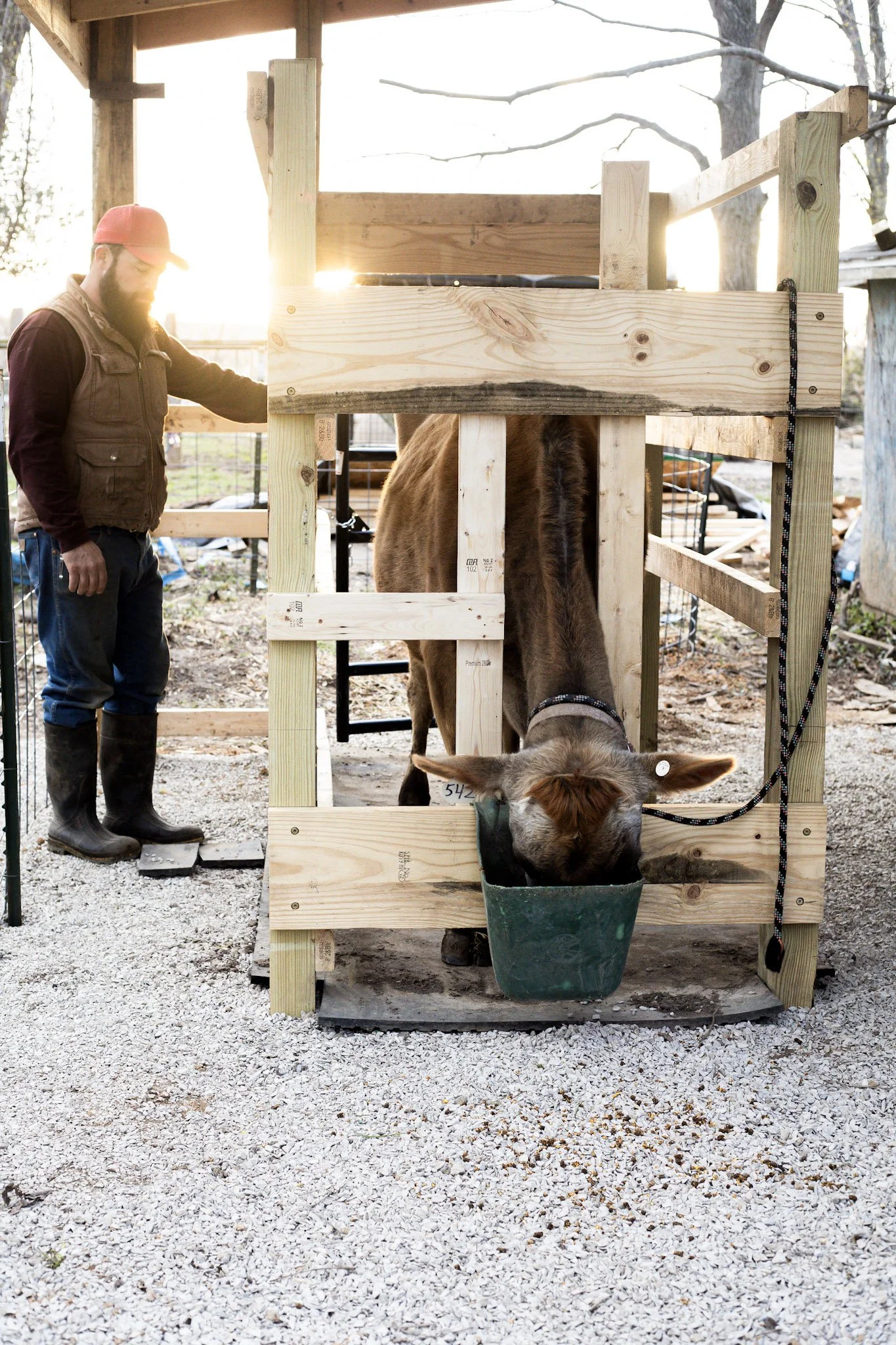
We're still learning every day, and one of the greatest blessings in this journey has been having an incredible mentor.
Our mentor operates a local sustainable dairy farm and has dedicated years of his life to regenerative agriculture, animal husbandry, and caring for his herd. As we began our own dairy, he generously shared his experience, helped us navigate the challenges of fresh cows, and taught us many of the practical lessons that simply can't be learned from a textbook.
One piece of advice that has stayed with us is this: in his experience, high-producing dairy cows simply don't thrive on pasture alone. While there are certainly farms that successfully produce 100% grass-fed milk—often with different genetics, lower-producing cows, or different management goals—his experience has been that trying to push modern production cows without supplemental energy often comes at the expense of the cow's body condition and long-term health.
That perspective resonated with us, especially after experiencing ketosis firsthand in one of our own cows. We realized our goal wasn't to earn a particular label—it was to care well for the animals God has entrusted to us. If providing a carefully formulated, non-GMO dairy ration helps our cows stay healthy, maintain their condition, and continue producing beautiful, nutrient-rich milk, then that's a choice we're happy to make.
We're deeply grateful for mentors who have invested in us and helped shape the way we farm. Their wisdom, combined with our own experiences, has reinforced our conviction that the healthiest cows are those whose nutritional needs are fully met—even if that means going against a popular trend.
But What About Grass-Fed?
Please don't misunderstand us—we love grass.
Our cows graze every day they're able, and healthy pasture is one of the foundations of good dairy farming.
However, the phrase "100% grass-fed" has become one of the biggest buzzwords in food today, and many people don't realize what it actually means.
Some breeds and genetics are wonderfully suited to producing moderate amounts of milk entirely on forage. Those cows are often an excellent fit for a homestead where one family simply wants enough milk for themselves.
Modern production Jerseys are different.
For generations, they have been selectively bred to produce significantly more milk than traditional family cows. Producing that much milk requires substantially more energy and protein than pasture alone can often provide, particularly during peak lactation.
Could we reduce milk production by feeding only grass?
Probably.
But we'd rather feed our cows according to what they need than intentionally limit their nutrition just to fit a popular label.
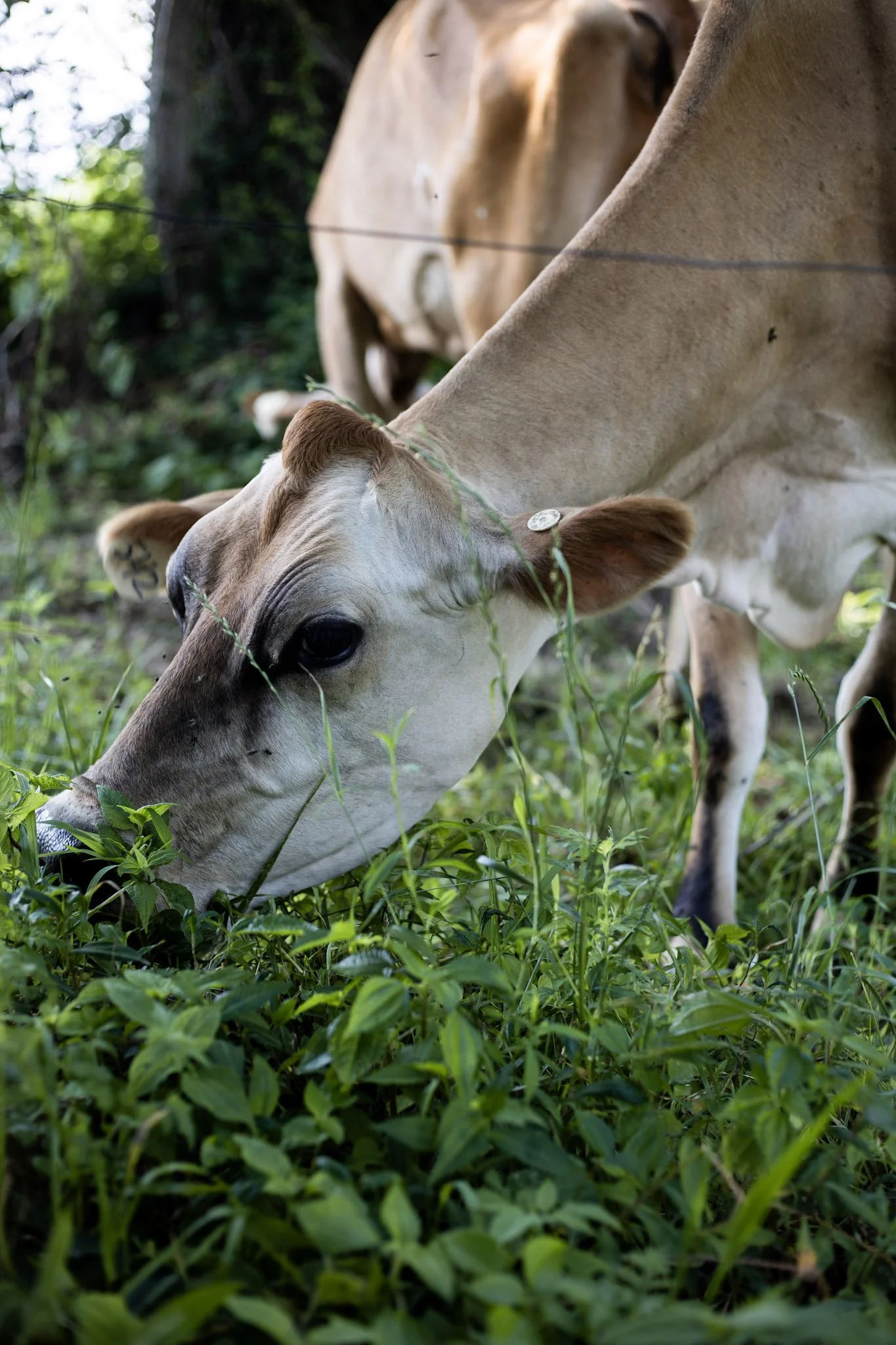
Why We're Not Afraid of Grain
Sometimes grain has become a dirty word.
We don't see it that way.
Like anything else, quality matters.
The feed we choose is a non-GMO dairy ration specifically formulated to provide the protein, energy, vitamins, and minerals our cows need. It's fortified with Redmond minerals and fed only once a day during milking—not as the bulk of their diet.
Grass remains the foundation.
The grain simply fills the nutritional gap created by high milk production.
Think of it like taking a high-quality multivitamin. It isn't replacing a healthy diet; it's helping supply nutrients that might otherwise be lacking.
It's About the Cow, Not the Label
When people ask whether our cows are 100% grass-fed, we understand where the question comes from.
Most people are really asking:
Are your cows healthy?
Are they well cared for?
Do they spend their days on pasture?
Are they treated humanely?
Is the milk wholesome?
Those are questions we love answering.
Because the answer to every one of them is yes.
Our girls spend their days grazing pasture, receive plenty of clean water, quality forage, balanced nutrition, fresh air, sunshine, and lots of love. We believe caring well for our animals isn't just good farming—it's good stewardship.
Our priority has never been to follow the latest food trend.
Our priority is healthy cows.
Because healthy cows produce healthy milk.
The Bigger Picture
While conversations often center around whether a cow is grass-fed or grain-fed, we think there's an even more important question to ask:
Where did your milk come from?
Buying fresh, local raw milk from a farmer you know means supporting a family farm that cares deeply about its animals, knows every cow by name, and is accountable to the families it serves.
To us, that's worth far more than any marketing label.
Every decision we make—from our pastures to our feed program to the minerals we supplement—is made with one goal in mind:
To give our girls the healthiest, happiest life possible.
Because when our cows thrive, everyone benefits.
And we think that's something worth raising a glass of milk to.
Sources & Further Reading
Drackley, J. K. (1999). Biology of Dairy Cows During the Transition Period: The Final Frontier? Journal of Dairy Science, 82(11), 2259–2273.
https://www.journalofdairyscience.org/article/S0022-0302(99)75474-3/fulltext
Excellent overview of why fresh dairy cows experience negative energy balance and why adequate energy intake is so important.Grummer, R. R. (1995). Impact of Changes in Organic Nutrient Metabolism on Feeding the Transition Dairy Cow.Journal of Animal Science.
https://academic.oup.com/jas/article-abstract/73/9/2820/4632907
Explains the metabolic demands placed on dairy cows immediately after calving.National Research Council. (2001). Nutrient Requirements of Dairy Cattle (7th Revised Edition).
https://nap.nationalacademies.org/catalog/9825/nutrient-requirements-of-dairy-cattle-seventh-revised-edition-2001
The gold standard reference used by nutritionists to formulate dairy rations.University of Minnesota Extension – Ketosis in Dairy Cattle
https://extension.umn.edu/dairy-health/ketosis-dairy-cows
A practical explanation of ketosis, its causes, prevention, and treatment.Cornell University College of Veterinary Medicine – Transition Cow Management
https://www.vet.cornell.edu/animal-health-diagnostic-center/programs/nyschap/modules-documents/transition-cow-management
Discusses the nutritional challenges dairy cows face around calving.Penn State Extension – Nutrition and Feeding of Dairy Cattle
https://extension.psu.edu/animals-and-livestock/dairy/nutrition
Provides research-based information on balancing forage with concentrates to meet nutritional needs.Journal of Dairy Science – Grain Supplementation of Grazing Dairy Cows
https://www.journalofdairyscience.org/
Numerous peer-reviewed studies demonstrate that supplementing grazing cows with grain can improve energy balance and milk production, particularly in high-producing animals.